Cattalonia Font: Elegant Script for Handmade Products
As a small business owner and product creator, finding the perfect typeface is often about balancing aesthetic beauty with practical production needs. We need fonts that look stunning on a screen but also cut cleanly on a Cricut or Silhouette, print crisply on textured cardstock, and remain legible at smaller sizes. Cattalonia is a signature typeface that bridges this gap beautifully. With its natural curves and organic shapes, this script font offers the warmth of handwriting while maintaining the structural integrity required for professional branding, packaging, and digital downloads.
The Visual Personality of Cattalonia
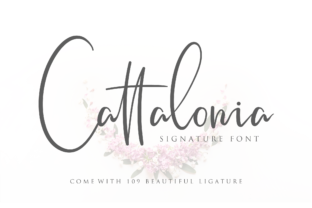
Cattalonia distinguishes itself from other script fonts through its fluid, unforced elegance. Many display fonts in the Script Amp category can feel overly ornate or difficult to read when scaled down, but Cattalonia retains a sense of approachability. The letterforms feature natural curves that mimic high-end calligraphy without appearing stiff or digitized. This visual personality makes it an exceptional choice for creators who want their physical products to convey a sense of bespoke quality and artisanal care.
The charm of this typeface lies in its versatility. It possesses enough character to stand alone as a logo or brand name, yet it remains refined enough to serve as a supporting element in complex layouts. For handmade sellers, this means you can use a single premium font across multiple product lines—from luxury candle labels to rustic wedding signage—while maintaining a cohesive brand identity. The natural flow of the letters creates an emotional connection with customers, suggesting that a real person crafted the item with intention and skill.
Practical Applications for Crafters and Sellers
When integrating Cattalonia into your creative workflow, consider how its specific attributes translate to different mediums. Because of its balanced weight and smooth connections, this font excels in applications where readability and style must coexist.
- Product Packaging and Labels: For jar labels, soap wrappers, or boutique tags, Cattalonia provides a luxurious touch. Its curves are distinct enough to be read quickly on a shelf, helping customers identify product names or scent varieties instantly. The font’s natural rhythm prevents the text from looking cluttered, which is essential for clean, modern packaging design.
- Wedding and Event Stationery: Invitation designers will appreciate how Cattalonia handles formal names and titles. It works beautifully for welcome boards, place cards, and menu headers. Unlike heavier blackletter or extremely thin hairline scripts, this typeface holds ink well on various paper stocks, ensuring your printed stationery looks as good in hand as it does in digital proofs.
- Vinyl and Adhesive Projects: For those using cutting machines for tumblers, car decals, or laptop stickers, line consistency is critical. Cattalonia’s steady stroke width reduces the risk of tearing during weeding. The natural curves allow the vinyl to lay flat against curved surfaces without buckling, making it ideal for drinkware and rounded signage.
- Digital Printables and Templates: If you sell editable templates or wall art, Cattalonia adds immediate perceived value. It serves as an excellent header font for planners, journals, and educational worksheets. Because it is legible even at moderate sizes, it functions well for inspirational quotes or daily affirmations where the text needs to be both decorative and functional.
Readability and Production Considerations
While Cattalonia is undeniably attractive, successful product creation requires attention to technical details. When using this font for physical goods, always test your size thresholds. For watermarks and subtle branding, the font can be scaled quite small due to its clear letterforms. However, for intricate vinyl cuts or embossing, avoid sizing the text below 0.5 inches unless you have verified the cut settings. The natural curves are forgiving, but extremely fine details may require a slower blade speed or a finer point blade to maintain crisp edges.
For printed materials like greeting cards or art prints, consider the paper texture. Cattalonia’s organic shapes pair wonderfully with linen, cotton, or kraft papers, as the font’s imperfections complement the material's grain. Conversely, on glossy or coated surfaces, ensure there is sufficient contrast between the ink and the background to preserve the delicate nuances of the script. When creating mockups for your Etsy shop or social media graphics, use this font to highlight key selling points or product names, as its handwritten feel draws the eye naturally across the design.
Strategic Font Pairing for Brand Consistency
To maximize the commercial utility of Cattalonia, pair it thoughtfully with complementary typefaces. As a creative font with significant personality, it acts as the "voice" of your design, while secondary fonts provide structure and information.
- Cattalonia + Clean Sans Serif: This is the most versatile pairing for product labels and web design. Use Cattalonia for the product name or brand logo, and a simple sans serif font (like Montserrat or Lato) for ingredients, instructions, or pricing. The contrast between the expressive script and the geometric sans serif creates a modern, professional hierarchy that guides the customer’s eye.
- Cattalonia + Classic Serif: For wedding stationery, book covers, or heritage-style branding, pair Cattalonia with a traditional serif font. This combination evokes timelessness and sophistication. The serif font grounds the airy script, adding weight and formality to the overall composition.
- Cattalonia + Minimalist Handwritten Font: If you want a fully organic, journal-like aesthetic for stickers or planner pages, pair Cattalonia with a simpler, monoline handwritten font. Use Cattalonia for emphasis and headers, and the secondary handwritten font for body text. Ensure the secondary font is significantly less ornate to avoid visual competition.
Licensing and Commercial Use for Makers
Before incorporating Cattalonia into items intended for sale, it is vital to understand the licensing terms associated with this typeface. As a commercial font, proper licensing protects both the designer and your business. Generally, a standard desktop license covers the creation of physical end products like mugs, shirts, signs, and printed stationery where the font is flattened or rendered as part of the final design.
However, if you plan to use Cattalonia in editable templates, digital downloads where the customer can manipulate the text, or SVG files sold as standalone design assets, you will likely require an extended or commercial license. Always review the specific EULA (End User License Agreement) provided with your purchase. Respecting these terms ensures you can build a sustainable, ethical handmade business while supporting the typographers who create these essential design assets. Additionally, check for included alternates, ligatures, and multilingual support within the font files, as these features can significantly expand your creative possibilities and market reach without needing additional purchases.